SUMMARY
QMS (Queue Management System) and PSPI (Patient Status and Progress Indicator) are technology-based systems that help patients understand their ER status to reduce anxiety and improve transparency.
Year
2025
Contribution
UX . Visual . Research
Context
Three month course project in User Centered Design
Project Objective
DESIGN GOALS
Develop a tool that can ensure transparency and access to status updates across all stages of ED/ER care.
Reduce patient and caregiver stress and anxiety throughout the emergency room visit.
PROBLEMS
There is considerable uncertainty in patients' ER visits. Not knowing “where I am” or “what happens next” is a key source of stress.
.
Research Process
METHODS USED
Secondary Research
A comprehensive review of the academic literature and healthcare design case studies was conducted to establish a baseline understanding of patient anxiety, communication gaps, and design opportunities.
Patient/caregiver survey (n=40)
Surveys were chosen for their cost-effectiveness and efficiency in collecting both quantitative and qualitative data from a large number of participants.
Semi-structured provider interview
The semi-structured interview with a provider was a crucial method that provided essential operational and technical context for our findings.


Area of focus
RESEARCH INSIGHTS
Narrow down our users to patients and their families/caregivers
Due to the project scope and timeline constraints, we narrowed our target user group to patients and their family members/caregivers.
Show the progress of patients' ER status to improve transparency
Based on our secondary research, anxiety is amplified by uncertainty; Patients want to have a tool that can monitor their ER progress.
Provide wait time for ER status
According to our survey results, satisfaction with the ER experience would improve if wait times were posted.


Design Exploration
IDEATE + EXCUTE
Brainstorm potential solutions
We looked up similar products for inspiration and created lighting demos to visualize our ideas.


Finalize the solution with low-fidelity prototypes
These sketches served as the visual bridge between low-fidelity concepts and the high-fidelity interactive prototype.

Queue Management System Paper Prototype

Patient Status Progress Indicator Paper Prototype

Mobile View of Patient Status Progress Indicator
Test & Iteration
HIGH-FIDELITY PROTOTYPE
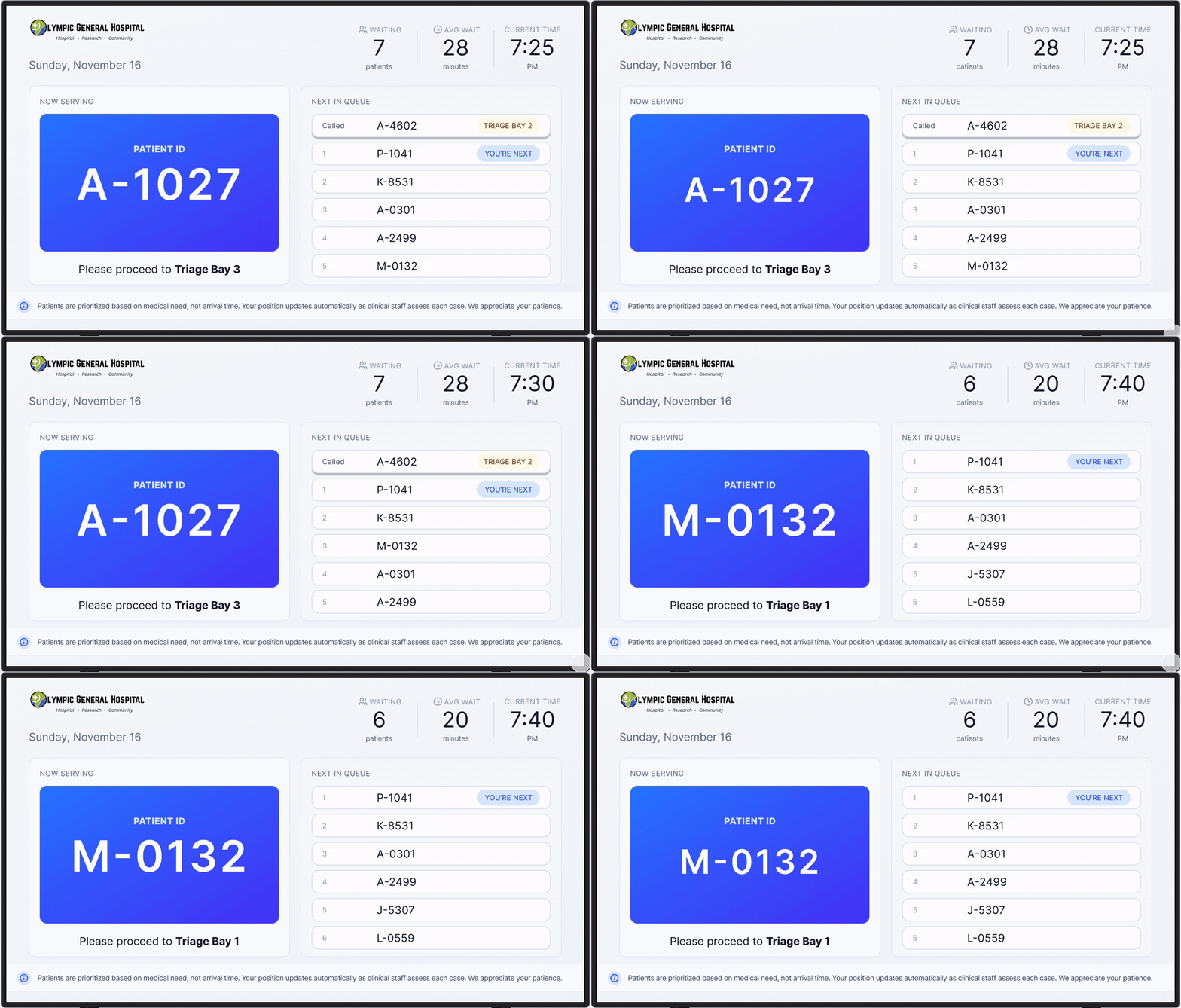
Queue Management Systems (QMS) — Ensure transparency as soon as patients step into the ER
-
To protect patients' privacy, we use a tokenized patient ID that adheres to HIPAA standards.
-
Continuous positional tracking allows patients and caregivers to track their relative position in the queue while waiting in the lobby.
-
The average wait time provides crucial transparency and helps effectively manage patient expectations.

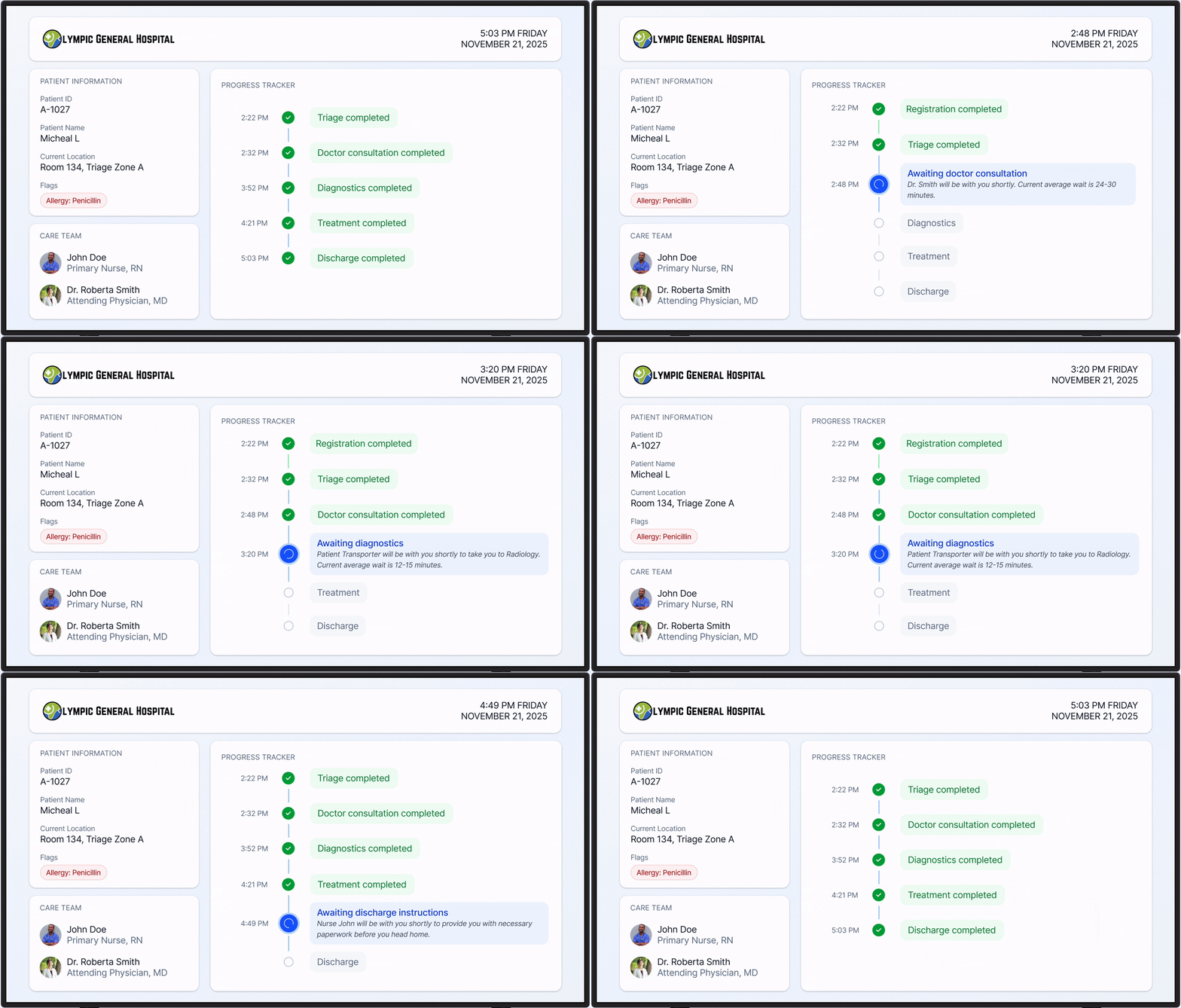
Patient Status and Progress Indicator (PSPI) — Show the progress to reduce patients' anxiety
-
Patients can follow their ER journey with a progress tracker that displays their current status and next steps.
-
Medical jargon is translated into easy-to-understand language to reduce confusion and facilitate effective communication between staff and patients.
-
The system provides information that includes the care team, room number, and the patient's medical flag to ensure transparency.

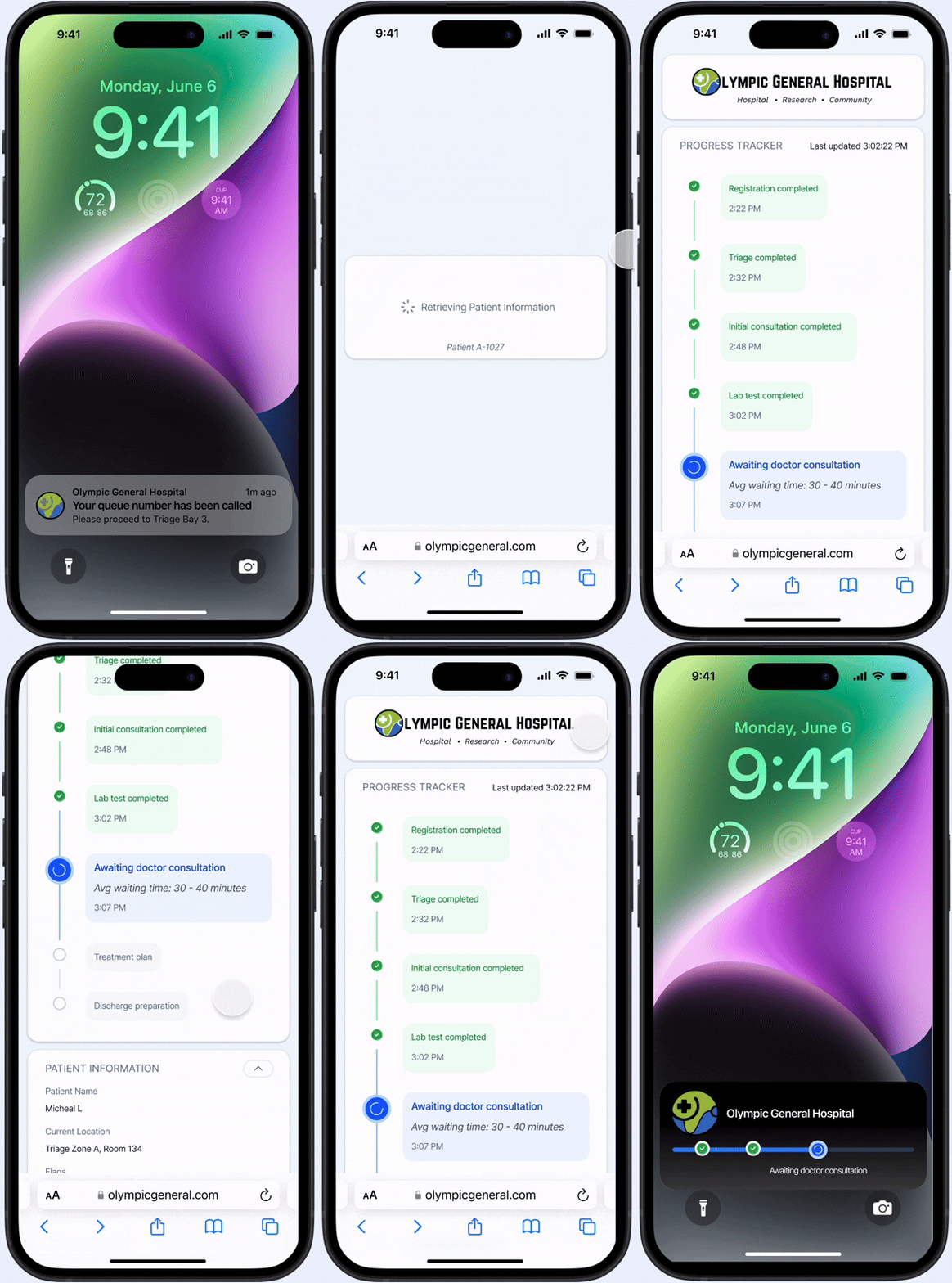
Patient Status and Progress Indicator (PSPI) —— Mobile View
-
Mobile access extends PSPl's functionality, ensuring that critical patient status and progression information is always accessible on personal devices.
-
It enables authorized caregivers, even when not physically present at the facility, to track patients' progress.
-
Patients who are not assigned to a room can still receive full status updates.


USABILITY TEST FEEDBACK
Iteration 1: Increase font size to fit large screen and reduce cognitive load
-
Increase the font size to enhance readability for the large display in the ER waiting room.
-
Simplify the queue information to improve clarity and reduce cognitive load.
Before

After

Iteration 2: Provide waiting time for the current status and enhance readability
-
Provided waiting time and a detailed explanation for the current status to ensure transparency.
-
Reduced the number of steps shown; prioritize the current + next step. And increased font size to enhance readability.
Before

After

The Final Outcome
We saw the following results for participants who came through the QMS & PSPI system
IMPACT
100%
Wish the system could be implemented in the ER across the country
90%
Believe the system can help reduce their anxiety level in ER visits.
90%
Have no confusion about the information on QMS & PSPI.
Reflection
Designing for emotion, not just “information.”
In healthcare, the real problem isn’t only “patients lack updates”. It’s that uncertainty that amplifies anxiety. PSPI/QMS pushed me to design for emotional load as a core UX constraint: every label, status, and timestamp either reduces stress or increases it. I learned to treat clarity as care—small wording choices can change how comfortable someone feels.
Accessibility isn’t a checklist in the ER; it's survival UX.
This project required me to move beyond “WCAG compliance” and to design for real-world limitations: language barriers, hearing/vision impairments, and cognitive overload. I learned to prioritize progressive disclosure, large-type hierarchy, clear state changes, and plain-language copy so the interface works when users are not at their best.
FINAL SOLUTION